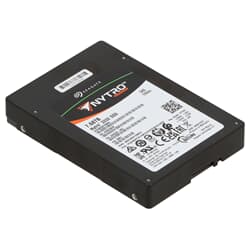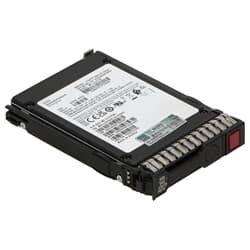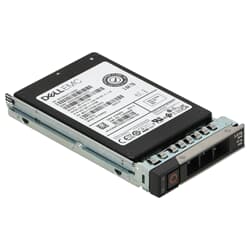
in stock
1
from
2,758.80 €
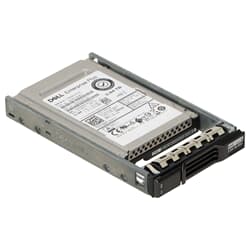
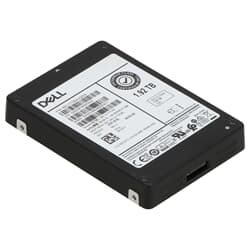
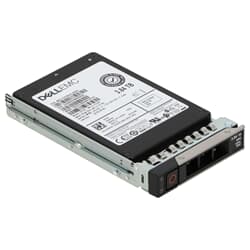
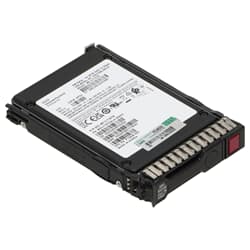
At GEKKO Computer, you can buy tested and refurbished SAS SSD drives from leading manufacturers for professional use in servers, storage systems, and rack environments. Every drive is in stock, fully tested, and ready for immediate deployment, allowing you to upgrade your infrastructure without long lead times.
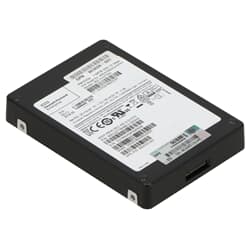
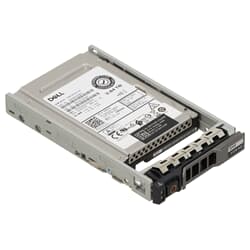
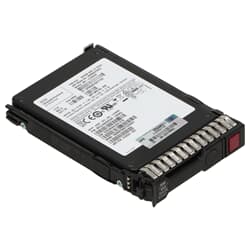
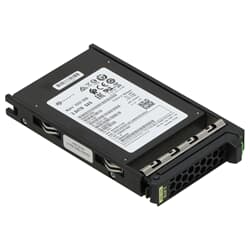
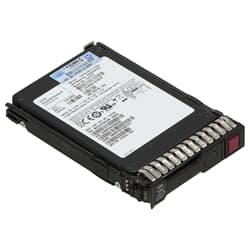
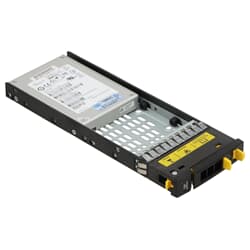
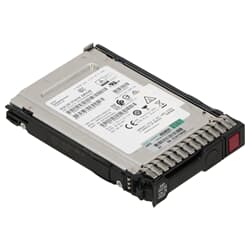
A SAS SSD is a solid-state drive connected through the SAS interface. SAS stands for Serial Attached SCSI and is the enterprise-focused successor to the classic SCSI protocol, designed specifically for continuous operation in data centers and business-critical environments. Unlike SATA, SAS supports full-duplex communication, which means data can be sent and received at the same time instead of sharing a single common channel. If you only need standard SATA connectivity for less demanding applications, you will also find a suitable selection in our category for SATA SSDs. One of the most important advantages of SAS in enterprise use is dual-port capability: a SAS SSD can be connected through two separate paths to two different controllers or storage nodes. If one path fails, the second path takes over automatically. This makes SAS SSDs ideal for redundant storage arrays such as 3PAR, Storwize, Unity, or Compellent. At the same time, one basic rule still applies: a standard SATA controller cannot operate a SAS SSD, while SAS backplanes will usually also accept conventional SATA drives.
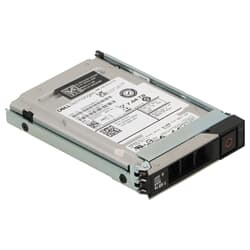
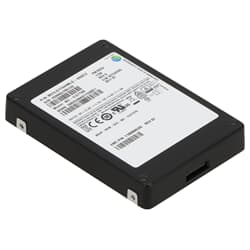
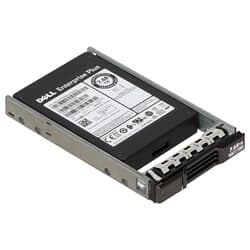
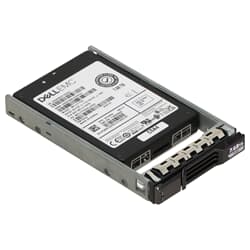
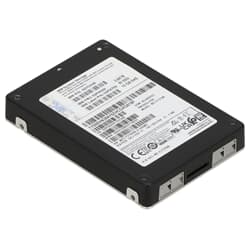
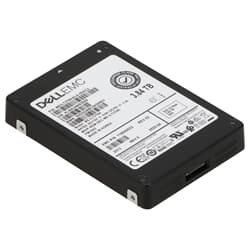
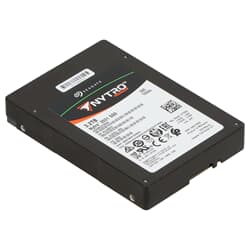
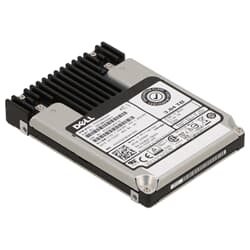
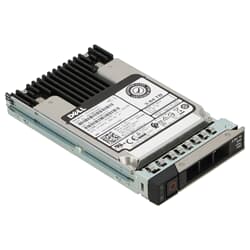
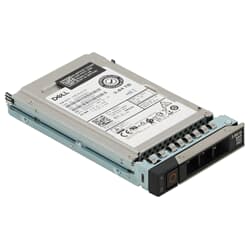
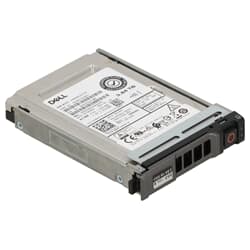
At GEKKO Computer, you will find SAS SSDs from established enterprise brands used in professional data centers worldwide. A Samsung server SSD from the PM1643 series is one of the most widely deployed models and is known for stable performance over its entire service life. HPE SAS SSDs from the ProLiant and 3PAR families are also in high demand because they are matched to the firmware requirements of the respective storage platforms. If you are looking for a Dell SAS SSD for PowerEdge servers or Compellent storage, we offer suitable capacities including original drive trays.
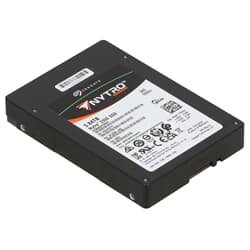
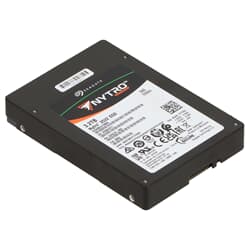
We also stock drives from IBM, NetApp, EMC, Seagate, and Fujitsu, making it easy to expand almost any existing system environment with compatible enterprise storage. If you need even higher transfer speeds, you will also find NVMe SSDs in our product range.
Servers and storage systems require different capacities depending on the intended workload. A 2TB SAS SSD, typically offering 1.92TB of usable capacity in practice, is well suited for boot volumes and smaller storage pools. A 4TB SAS SSD with 3.84TB usable capacity has become a common standard in productive virtualization environments. For especially storage-intensive arrays, 7.68TB models are also available and allow high total capacity with comparatively few populated drive bays. All capacities are available from stock and can be ordered individually.
SAS SSDs are commonly used wherever consistent performance, high availability, and enterprise reliability matter more than the initial purchase price. Typical use cases include VMware or Hyper-V virtualization hosts, database servers with high I/O loads, and storage arrays that operate multiple drives simultaneously through a shared backplane. The endurance of SAS technology is also clearly visible in backup target systems with high write throughput, where enterprise drives can outperform comparable consumer SSDs in long-term operation. If you also need a SAS hard drive for large volumes of primarily sequential data, you will also find classic SAS HDDs in our shop.
Before buying, it is worth checking the technical specifications of your existing system. Make sure your backplane supports 6G, 12G, or already 24G SAS, because even the fastest SSD will only operate at the maximum speed supported by the surrounding hardware. You should also consider the endurance class carefully: read-intensive models are suitable for mostly read-focused workloads, while mixed-use or write-intensive SSDs are designed for database-related applications and other environments with heavy write activity. If you are planning a more extensive upgrade, you will also find suitable SAS controllers and hot-plug drive trays in our range.
Enterprise hardware is designed from the beginning for 24/7 continuous operation, which means a used enterprise SSD can still offer considerable performance reserves even in its second life cycle. At GEKKO Computer, every drive is carefully tested before sale so that defective or heavily worn units are consistently filtered out. Choosing refurbished enterprise storage instead of buying new not only reduces costs, but also helps conserve resources by extending the service life of high-quality storage components. If you have any questions about compatibility or the right configuration, our team will be happy to help you expand your server or storage system smoothly and reliably.
SAS stands for Serial Attached SCSI. It is the data transfer protocol used by the SSD to communicate with a server or storage system and offers full-duplex communication, dual-port capability, and closer integration with RAID controllers than SATA.
No. A SATA controller cannot physically or technically operate a SAS drive because it does not support the required connection and command set. In many cases, however, SAS backplanes can also work with SATA drives.
These values indicate the maximum theoretical transfer rate per port: 6, 12, or 24 gigabits per second. Higher bandwidth is especially beneficial in storage arrays and other environments with many simultaneous read and write operations.
Dual-port means that the drive can be connected to two different controllers through two independent data paths at the same time. If one path fails, the second path takes over automatically, which improves availability in redundant enterprise systems.
Read-intensive models are usually sufficient for mostly read-heavy workloads such as archives or file servers. For databases, logging systems, or virtualized environments with frequent write operations, mixed-use or write-intensive SSDs are the better choice.
Yes. Enterprise SSDs are built for long operating cycles and continuous use, which means they can still offer strong performance when refurbished. The key factor is professional testing and condition assessment before sale.
Not always. Compatibility depends on the server backplane, storage controller, and the correct form factor, which is usually 2.5 inch in enterprise environments. If you are unsure, it is best to check the server specifications or contact our support team.