
SAS Hard Drives for Servers and Storage
When databases and virtualization hosts access storage around the clock, it quickly becomes clear which drive was actually built for continuous use. That's exactly what a SAS hard drive is designed for. At GEKKO, you'll find refurbished models from HPE, Dell, Lenovo, IBM, Fujitsu, and other manufacturers. All tested, in stock, and ready to install.
in stock
2
from
559.68 €
in stock
17
from
559.68 €
in stock
48
from
516.56 €
in stock
5
from
516.56 €
in stock
6
from
516.56 €
in stock
8
from
430.32 €
in stock
5
from
430.32 €
in stock
23
from
430.32 €
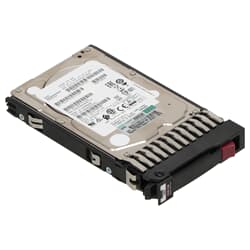
in stock
41
from
430.32 €
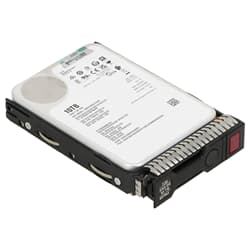
in stock
36
from
430.32 €
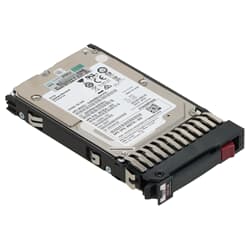
in stock
1
from
430.32 €
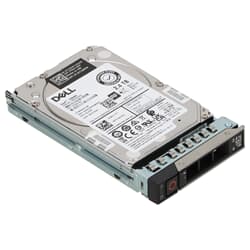
in stock
30
from
430.32 €
in stock
15
from
430.32 €
in stock
1
from
430.32 €
in stock
3
from
344.08 €
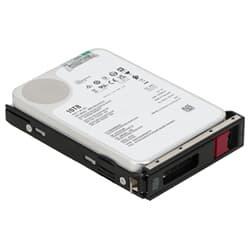
in stock
6
from
318.12 €
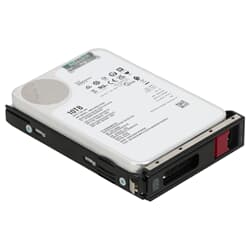
in stock
22
from
318.12 €
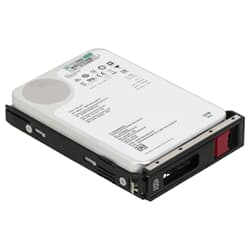
in stock
84
from
318.12 €
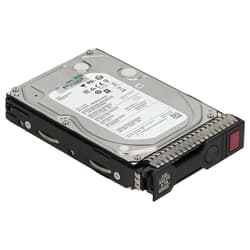
in stock
5
from
257.84 €
in stock
40
from
257.84 €

in stock
10
from
205.92 €
in stock
17
from
179.96 €
What Really Sets SAS Drives Apart
At first glance, SAS and SATA drives look similar. In server operation, though, they're worlds apart. SAS is based on the SCSI command set and is built for many drives sharing a single controller. Because the connection transfers in both directions in parallel, data flow stays consistent even under heavy load. The biggest difference, however, only becomes apparent when something goes wrong. If a SAS drive hits a hard-to-read sector, it doesn't keep retrying for minutes on end; instead, it reports the error to the RAID controller after a short time. With redundant RAID levels, the controller then reconstructs the data, and the drive isn't prematurely marked as failed. On top of that, most SAS drives come with a second data port. In storage systems such as the HPE MSA, for which we carry specially labeled dual-port models, this keeps every drive reachable even if one path fails.
How to Find the Right SAS Hard Drive
Rotational Speed, Capacity, and Form Factor
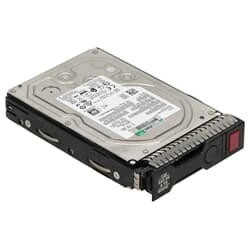
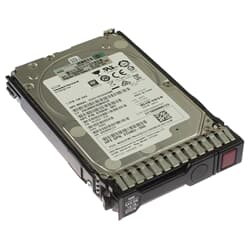
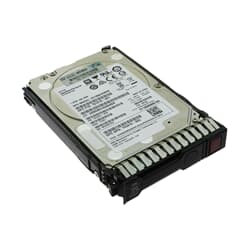
Our range mainly covers two classic use profiles. 2.5-inch (SFF) drives mostly spin at 10,000 or 15,000 RPM and deliver short access times for databases and transaction-heavy applications, available for example in 600 GB, 900 GB, 1.8 TB, or 2.4 TB. If you need more capacity per bay, 3.5-inch (LFF) drives spinning at 7,200 RPM, often referred to as Nearline SAS, are the better fit. With capacities such as 6 TB, 8 TB, or 12 TB, they form the basis for backups, archives, and large data stores.
Interface, Sector Format, and Firmware
Alongside current SAS 12G models, we also carry 6G drives for older servers. The generations are compatible: a 12G SAS drive will run on a 6G controller, just at the lower speed. The higher bandwidth becomes noticeable above all when many drives share a connection through expanders and backplanes. The sector format matters just as much. Besides 512n drives, there are 512e models, which work internally with 4K sectors while emulating 512 bytes externally, as well as native 4Kn drives. These need to be supported by both the operating system and the controller, which is especially worth checking with older RAID controllers and HBAs. Drives with 520-byte sectors play a special role: they're formatted for storage systems such as the HPE 3PAR and won't work in a regular server without further steps. Since firmware is also often matched to the target system, many of our product names directly reference systems such as the HPE MSA or IBM Storwize.
Trays and Compatibility
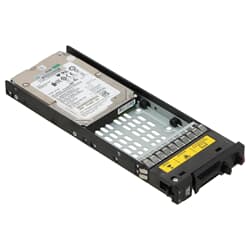
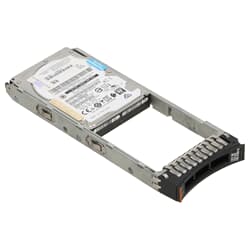
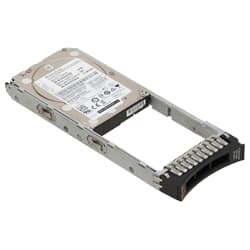
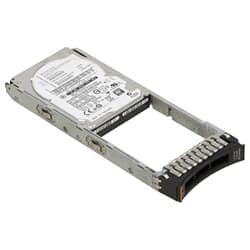
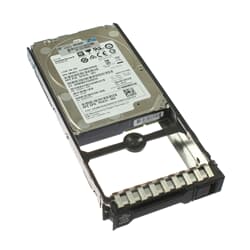
For a SAS drive to sit securely in a hot-swap bay, it needs the right tray, and this differs by manufacturer and often by server generation as well. That's why our product pages show whether a tray is included, which tray type fits, and which systems the drive is compatible with. If a drive ships without a tray, you'll also find matching hot-plug trays with us. If your system isn't on the list, we're happy to check compatibility for you.
SAS SSD or SAS HDD?
Where high IOPS figures and minimal latency are required, such as with VM storage, SAS SSDs play to their strengths. Since both types use the same connector, many servers let you combine them as a fast SSD tier plus capacity storage. When it comes to price per terabyte, the SAS HDD remains the clear winner and the more economical choice for large data volumes.
Our SAS Hard Drives: Refurbished, Tested, and Ready to Ship
Enterprise drives are built for a long service life, and that's exactly what benefits you when buying used SAS hard drives. Before a drive goes into our warehouse stock, we evaluate its S.M.A.R.T. values, including power-on hours, read and write errors, and uncorrectable sectors. Only once the values look clean and it has passed a final benchmark does the drive go on sale. All items are in stock and ship the same day if ordered in time. Volume pricing on many models pays off especially when building out a RAID array. Whether as a spare part or for expanding multiple servers, either way you ease the strain on your budget and keep functional hardware in use, for which no raw materials need to go into new production.
FAQ
Can I run SAS and SATA drives together?
A SAS controller can generally run both SAS and SATA drives. Within a single RAID array, though, you shouldn't mix the two types. The reverse doesn't work: a SAS drive won't fit into a SATA connector because of the continuous bridge between its data and power contacts, and a plain SATA controller doesn't understand the SAS protocol.
Why are SAS drives particularly well suited to RAID?
Thanks to a limited error-correction time, they quickly report read errors to the controller, which then reconstructs the data from mirroring or parity on redundant RAID levels. Desktop drives, by contrast, often keep trying to read a sector for a long time and get marked as failed by the controller, which can trigger unnecessary rebuilds.
What are the advantages of a 12G SAS SSD over 6G SAS?
A 12G SAS drive doubles the theoretical throughput to 12 Gbit/s per port. This is especially noticeable when using a fast SAS SSD or large storage arrays, since the data-transfer bottleneck shifts significantly higher.