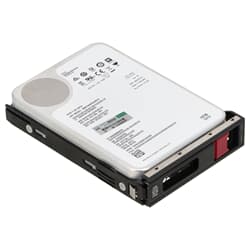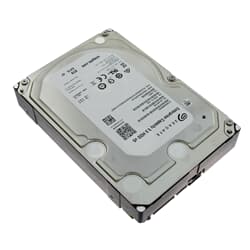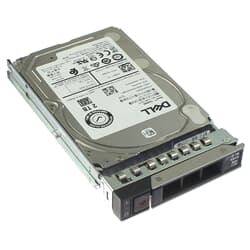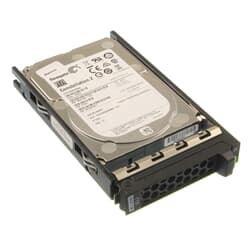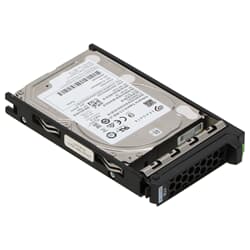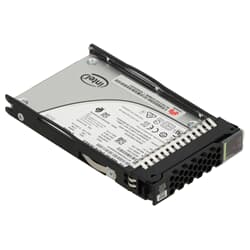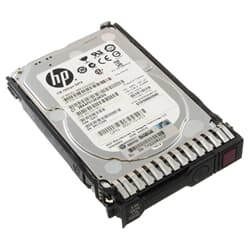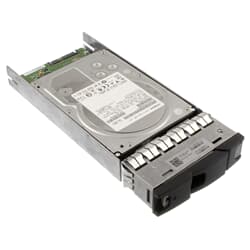
in stock
12
from
387.20 €
Plenty of storage space at a predictable price per terabyte: an enterprise-grade SATA hard drive provides a cost-effective solution for large corporate data sets. At GEKKO, you can purchase second-hand drives that have been tested by our team of technicians and which we dispatch directly from our warehouse in Berlin.
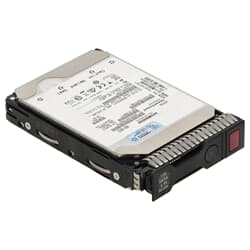
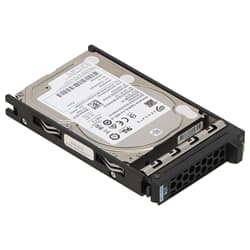
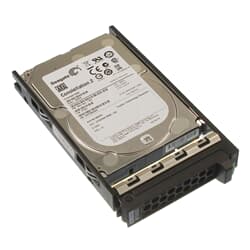
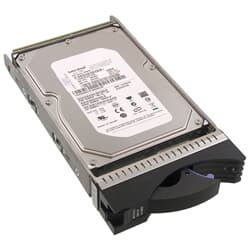
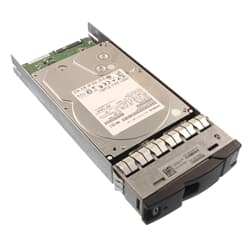
Hard drives with a SATA interface remain a reliable and cost-efficient foundation for server and workstation environments. In daily business use they stand out for high capacities, solid performance, and a technology that has matured over many years. Our range consists mainly of used enterprise-class drives that are suitable as data storage, backup media, or, in compact form factors, as boot drives.
For many scenarios, these drives offer just the right mix of capacity, reliability, and cost. They play to their strengths whenever large volumes of data need to be stored safely and for the long term, such as archive data, extensive media projects, or company data subject to statutory retention periods.
Compared with consumer models, an enterprise SATA hard drive is designed for continuous load and 24/7 operation. In addition there is Error Recovery Control, also called TLER or CCTL depending on the manufacturer. It limits the time the drive spends on internal correction attempts after a read error. This lets the RAID controller handle the error itself instead of dropping the drive from the array as defective because it stopped responding.
Used drives are an attractive option for companies that want to cut costs while operating sustainably. Many models in our range carry the part numbers of manufacturers such as HPE, Dell, Fujitsu, or NetApp and therefore come from professional server and storage systems. Before a refurbished SATA HDD goes on sale, we analyze its S.M.A.R.T. data, including power-on hours, power cycles, read and write errors, and uncorrectable sectors. Only if the values point to many more years of service and a final benchmark test is passed do we add the drive to our stock.
The result is hard drives that are technically and visually flawless and suitable for production systems as well as for secondary tasks. Anyone who uses a refurbished SATA HDD instead of a new device also extends the life cycle of hardware that has already been produced and thus makes a tangible contribution to Green IT.
In servers, the SATA hard drive often serves as data storage in file servers, backup systems, or virtualization hosts. In storage systems and NAS environments, it forms the capacity tier. For a refurbished NAS HDD, we recommend models that are explicitly approved for enclosures with many drive bays. In workstations, hard drives hold large project files, video footage, image archives, or CAD data, while the operating system and applications run on an SSD. By using several drives in a RAID array, capacity, data security, and performance can be combined flexibly. This lets you tailor your storage strategy precisely to the requirements of your infrastructure. For example, if you are expanding an archive and buy a refurbished 10 TB HDD instead of a new one, you get the same capacity at a noticeably lower price.
Besides capacity, you should pay particular attention to rotational speed, cache size, and the intended duty class. The latter tells you whether a drive is approved for continuous operation in a server. Most server hard drives run at 7,200 rpm, which is a good compromise between access time, power consumption, and heat generation.
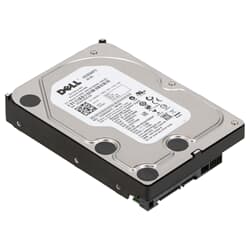
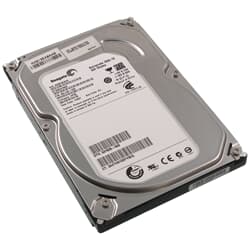
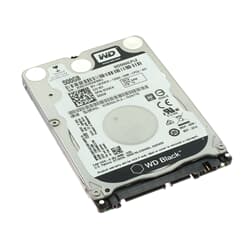
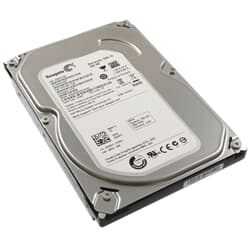
A SATA III hard drive transfers up to 6 Gbit/s. Older SATA II models run at 3 Gbit/s and, being backward compatible, also work on current ports. Since a mechanical hard drive does not saturate the interface anyway, the form factor is usually the more important question. The 3.5-inch SATA hard drive delivers maximum capacity in a classic server or tower chassis, in our range up to double-digit terabytes. The 2.5-inch SATA hard drive is more space-saving. It is in demand in SFF servers and smaller workstations and, with enterprise models, usually reaches up to two terabytes.
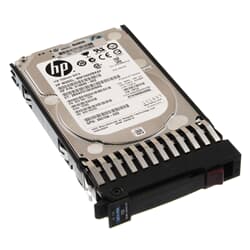
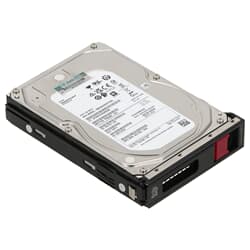
For a drive to run smoothly, form factor, connector, and mounting tray must match the respective system. Hot-plug trays differ not only by size but also by manufacturer and server generation. For example, the tray of an HP ProLiant DL380 G7 does not fit into a Gen8 model. It is also good to know that SATA drives can be operated on SAS controllers and in SAS backplanes. The reverse does not work. If you need the highest I/O load or a dual-port connection, choose SAS hard drives instead. If you have questions about selection, please get in touch.
Even though SSDs are clearly ahead in access times and IOPS, the cost per terabyte for large data volumes with mostly sequential access usually works out clearly in favor of the hard drive. An 8 TB HDD, refurbished and tested by us, holds so much that the same capacity on flash would cost many times more. Many companies therefore rely on a mix: fast SSDs for the operating system and active projects, plus the SATA hard drive as a large, reliable storage pool in the background.
SATA transfers data in half duplex, SAS in full duplex, and many SAS models offer two ports for a redundant connection. SAS drives are therefore designed for very high loads, while SATA models mainly impress with inexpensive capacity.
Yes, provided they are tested drives for server use. Before sale we check, among other things, power-on hours, read errors, and uncorrectable sectors. Only if these values point to many more years of service do we add a drive to our range. In addition, all items come with a 12-month warranty.
In many cases, yes. However, server manufacturers sometimes adapt the firmware of their drives so that all functions are available together with their own controller. Whether a matching tray is included is shown in the technical data of the respective item. If you tell us your server model, we will gladly check compatibility for you.